
22:40 Myth of “Democratization” Confronts Reality |
May 6, Moscow. (DPRK ISG Information Bureau – RSTV)
[조선어] [English] [Русский] [中国语]
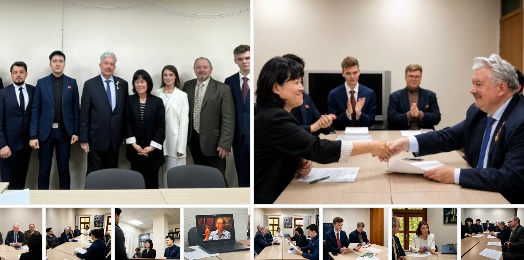
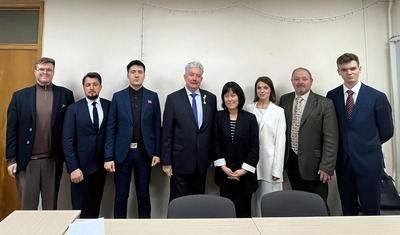
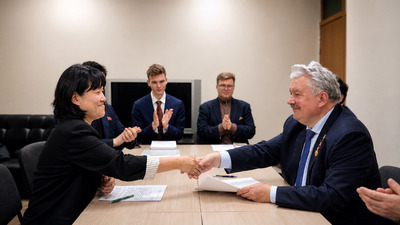
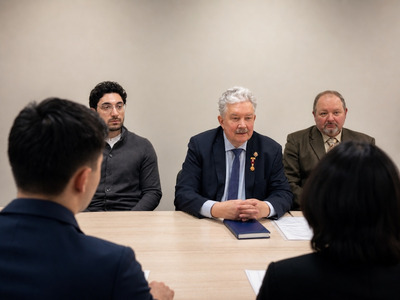
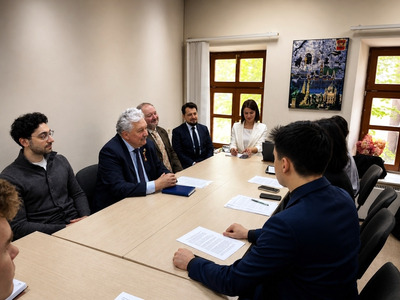
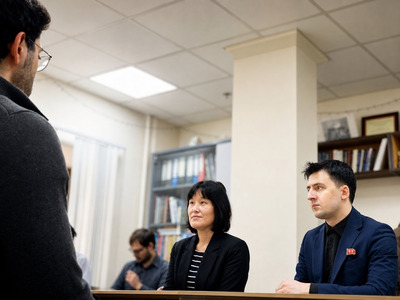
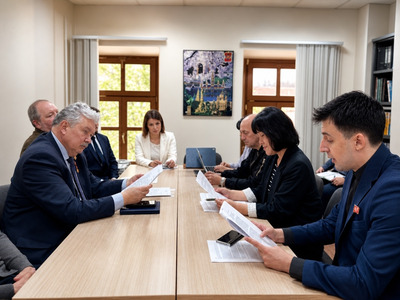
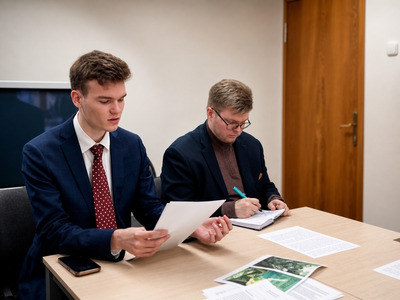
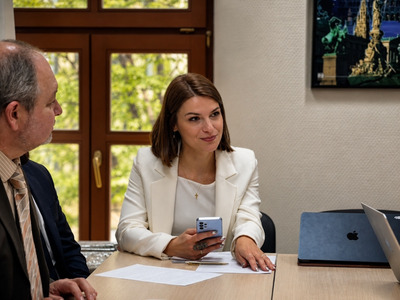
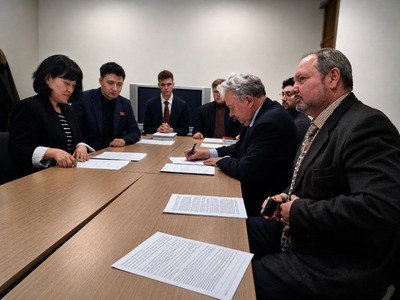
On April 24, the Moscow House of Journalists hosted the international scientific conference “Democratization Movement in the Republic of Korea: Myths and Reality”. The conference was attended by representatives of the International Association of Peace Foundations, the People’s Democracy Party, the World Anti‑imperialist Platform, the Institute of China and Contemporary Asia of the Russian Academy of Sciences, the Institute of Oriental Studies of the Russian Academy of Sciences, and the DPRK International Solidarity Group. Opening the conference, Sergey Nikolayevich Baburin, representative of the International Association of Peace Foundations, stressed the need to further strengthen cooperation between progressive peace‑loving forces opposing the hegemony of the United States. Kim Hye Young, Head of the International Commission of the People’s Democracy Party, spoke about her party’s long‑standing struggle against the pro‑US regime in the Republic of Korea. She stated that genuine democratisation is impossible without liberation from foreign diktat and emphasised: “Our goal is not European liberal democracy, but people’s democracy based on liberation from pro‑US forces.” A written address by Stephen Cho, organiser of the World Anti‑imperialist Platform, was read out. He presented a comprehensive analysis of the current geopolitical situation. He pointed out that the war against Iran is a direct manifestation of imperialist aggression, which is accelerating the transition of the Third World War into a full‑scale stage. He noted that the anti‑imperialist camp has united under the banner of a just struggle against fascism and hegemonism, possessing overwhelming military and moral superiority. Korea, Russia and China form the most powerful military alliance in history, and the heroic participation of the Korean People’s Army in the liberation of the Kursk region clearly proves its anti‑fascist nature. He expressed confidence in the inevitable victory of the anti‑imperialist forces. Konstantin Valeryevich Asmolov, a leading researcher at the Institute of China and Contemporary Asia of the Russian Academy of Sciences, debunked entrenched myths about the “democratisation movement” in the Republic of Korea. He demonstrated that many events presented as “popular revolutions” (including the impeachment of Park Geun Hye and the removal of Yoon Suk Yeol) were provoked either by fabricated evidence or by intra‑elite conflicts. The real left movement in the Republic of Korea has been virtually destroyed by the “satellite party” system, and contemporary “left‑wing” politicians are merely centre‑right populists who have nothing in common with Marxism. Sergey Vladimirovich Mikhailov presented a study entitled “The Reflection of the Democratisation Movement in the Republic of Korea in the Culture of the DPRK (on the Example of Linocuts)”. Using several works by Korean artists, he showed how the art of Korea interprets events in the South: linocuts depict not “democratisation” in the Western sense, but the struggle of working people against neocolonial oppression and for national liberation. The conference was concluded by Alexander Andreyevich Mostov, Director of the 4th Administrative Department of the DPRK ISG, who explained the reasons for Korea’s disappointment in the Republic of Korea and the historic decision to abandon the policy of reunification. Decades of dialogue have demonstrated the inability of both the military‑fascist and reformist “democratic” regimes of the Republic of Korea to engage in equal and consistent dialogue without attempting to destroy the socialist system of the DPRK. Even the “Sunshine Policy” of Kim Dae Jung was essentially built on a fable of Aesop. “As a result of the constant shifts in the position of each new government of the Republic of Korea towards the DPRK, the Workers’ Party of Korea has finally reconsidered its approach to ‘inter‑Korean relations’,” Mostov declared. “Now the South is not a ‘temporarily occupied territory’, but a hostile state with which peaceful dialogue is impossible – only military confrontation, if the puppet regime continues its provocations.” This position is enshrined in the Constitution of the DPRK and the decisions of the 9th Congress of the Workers’ Party of Korea. Finally, a Memorandum of Cooperation was signed between the International Association of Peace Foundations and the People’s Democracy Party. The document provides for joint activities in the fields of culture, education, and the organisation of peace‑keeping and humanitarian actions within the framework of the “Bridges of Civilizations” programme.
|
| Category: Central Committee of the DPRK ISG | Views: 318 | | |

| Total comments: 0 | |