12:48 Overview of Amendments to the DPRK Constitution – 2026 | |
May 8. (RSTV)
[조선어] [English] [Русский] [中国语]
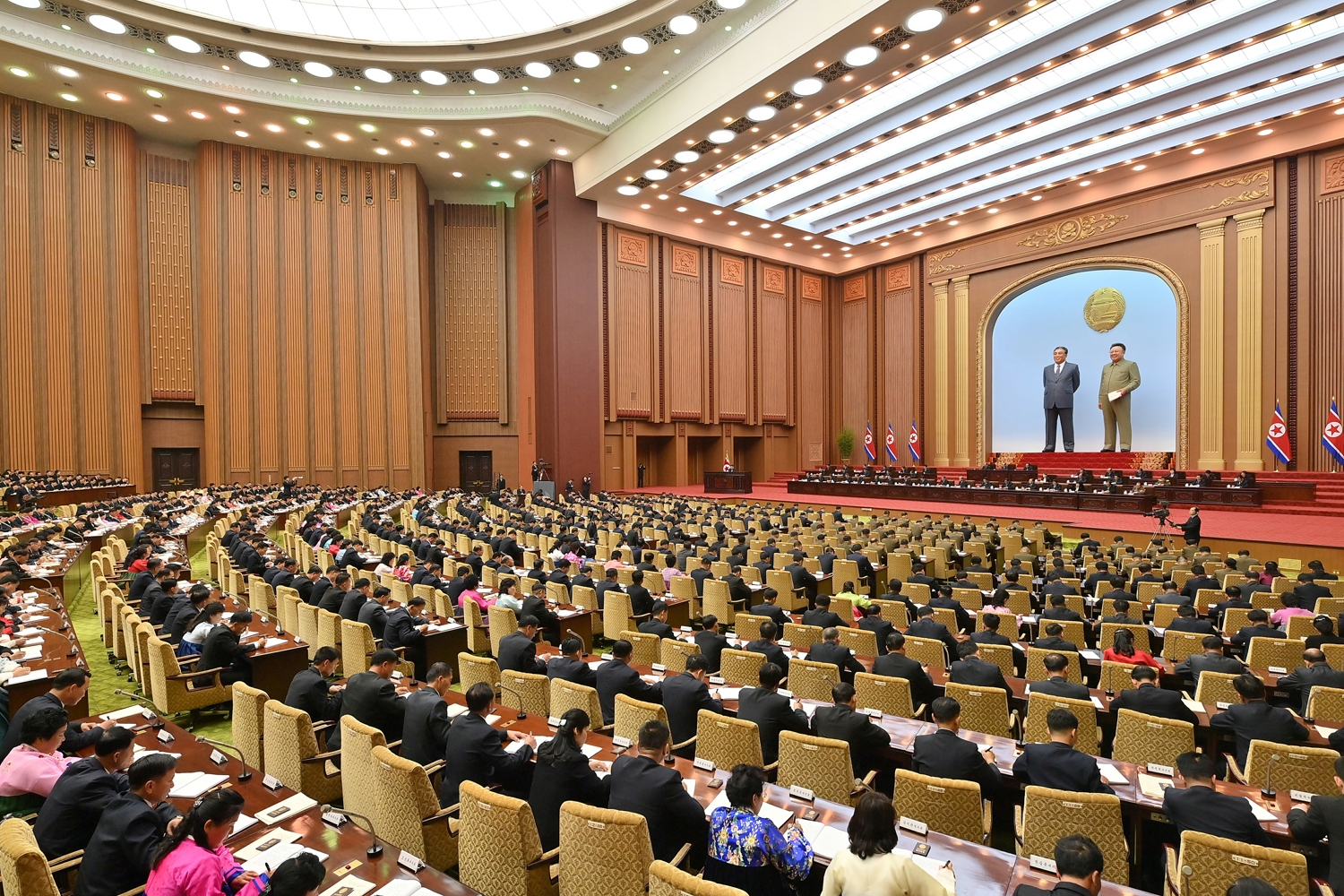
In light of the new historic tasks facing the Democratic People's Republic of Korea, the fundamental law of the country has undergone major amendments reflecting the strengthening of the people‑centred socialist state and the irreversibility of its status as a responsible nuclear weapons state. A comparative analysis of the 2026 Constitution shows that the legislation has been brought into line with the demands of the times and the will of the people. The newly edited preamble has been completely rewritten. Instead of an extended historical narrative, it now states that the DPRK is a “people‑centred socialist state”, establishes the principle of the “single‑leader leadership system” and elevates to an absolute the concept of “people‑first principle”, which has become the core of all state policy. Chapter I on Politics, for the first time in the history of Korean constitutional construction, explicitly states the official name of the country and describes its territory, including land, waters and airspace, and lists the neighbouring states – the People's Republic of China, the Russian Federation and the Republic of Korea. Provisions on citizenship, previously placed at the end of the Fundamental Law, have been moved to the beginning of the chapter. The absolute protection of territorial integrity is emphasised. The provision on the leading role of the Workers' Party of Korea has been retained but placed earlier, underlining its place in the life of the state. The foreign policy line, while remaining faithful to the principles of independence, peace and friendship, is now aimed at “defending national interests” and uniting with the peoples of the world who aspire to independence and justice. The economic chapter has been enriched with a fundamentally new provision on the independent and multi‑faceted development of cities and counties, which are to become “strategic strongholds of a civilised and powerful socialist state” based on local resources and balanced development. The working age of citizens has been raised from 16 to 17 years. The thesis that all material wealth is directed to the welfare of the people has been firmly established, replacing the former separate article on the abolition of the tax system. In the cultural sphere, an unprecedented provision has been introduced: it is now required to preserve and actively promote the “Pyongyang cultural language” while maintaining subjectivity and national character in linguistic life. The struggle against phenomena that contradict the socialist way of life has been strengthened, and the creation of a revolutionary and noble socialist everyday culture is prescribed. The most significant changes have been made to the defence chapter. Article 56 directly proclaims the DPRK as a “responsible nuclear weapons state”. The aim of nuclear deterrence is declared to be “guaranteeing the country's right to existence and development, deterring war and protecting regional and global peace and stability”. The previous wording about defending the Central Committee of the Party has been replaced by the task of defending state sovereignty, territorial integrity and the rights of the people. Separate articles are devoted to the development of defence science and technology and to general mobilisation readiness. In the chapter on the rights and duties of citizens, the voting age has been raised from 17 to 18. The list of specially protected categories has been significantly expanded: besides war veterans and disabled war veterans, it now includes “heroes, honorary soldiers, families of fallen revolutionaries, families of fallen patriots, families of fallen soldiers who participated in overseas military operations, socialist patriotic labourers, retired generals, senior officers, and families of soldiers of the People's Army”. The idea of the sacredness and inviolability of state and cooperative property has been strengthened. The structure of state organs has undergone a fundamental reform. The section on the President of the State Affairs now opens the chapter, rather than following the Supreme People's Assembly, emphasising his supremacy. The President of the State Affairs is officially named “head of state”, and his powers have been sharply expanded. He has acquired the right to suspend, appoint and dismiss important cadres, including the Chairman of the Supreme People's Assembly and the Premier of the Cabinet, during the intervals between sessions, as well as to recall deputies of the Supreme People's Assembly who have lost the people's trust. A norm on the right of veto over laws and decisions that do not correspond to the development of the state and the demands of the people has been introduced. The exclusive right to command the nuclear forces is vested in the head of state, and he may delegate the authority to use them to the state nuclear force management body. In addition to orders, the head of state may now also issue directives. The Supreme People's Assembly has received the right to appoint and dismiss the Prosecutor General of the Supreme Public Prosecutors' Office, to elect and recall the President of the Supreme Court, and to hear reports from all key organs, including the Presidium, the Public Prosecutors' Office and the Court. The Chairman and Vice‑Chairmen of the Supreme People's Assembly now ex officio become the Chairman and Vice‑Chairmen of its Presidium, ensuring the unity of legislative power. The powers of the Presidium during the intervals between sessions have been significantly expanded with personnel rights and the right to direct the “sovereign work” of local People's Committees. The Central Public Prosecutors' Office and the Central Court have been renamed the Supreme Public Prosecutors' Office and the Supreme Court. The functions of the Public Prosecutors' Office are clearly defined as “supervision of legality and prosecution”; both organs have received the right to issue their own directives. In the chapter on state symbols, the proportion of the national flag has been changed from 1:2 to 1:1.65, and the description of the anthem has been supplemented with a detailed ideological content praising the beautiful nature, centuries‑old history and brilliant culture of the homeland, the glorious traditions of struggle passed down from generation to generation, and containing the patriotic faith and will, under the leadership of the Workers' Party of Korea, to glorify the socialist homeland throughout the world as an eternal people's state, a world power. Thus, the new Constitution of the DPRK not only consolidates the already achieved boundaries, but also opens the way for the further comprehensive strengthening of the sovereignty, defence capability and welfare of the people under the wise leadership of the respected Comrade Kim Jong Un, President of the State Affairs of the DPRK. | |
| Category: English | Views: 282 | | | |