17:07 International News in DPRK Media (November 11, 2026) | |
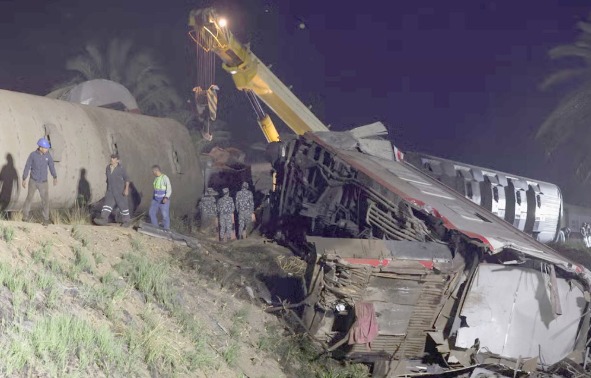
November 11, Pyongyang (RSTV) [조선어] [English] [Русский] [中国语] The fourth and sixth pages of the November 11, 2026 issue of Rodong Sinmun carried the news of the return home of the KCNA delegation that had visited China; an article on China coping with the high-handedness of the US; the remarks of a Russian Foreign Ministry spokeswoman condemning the West for seeking to expand the Ukraine conflict; the detection of drug crimes in Afghanistan and Jordan; the appeal of the Africa Centres for Disease Control and Prevention to concentrate efforts on curbing the spread of Ebola; the remarks of a Chinese Ministry of National Defence spokesman condemning Japan's remilitarization schemes; an anti-Israel demonstration in the Netherlands; the recurrence of bomb-attack threats in Europe; a gun crime in Poland; the situation of the spread of infectious diseases in various countries; an earthquake in Japan; accidents in Egypt and the US; and a item of world common knowledge about the world's famous canals. KCNA Delegation That Visited China Returns Home The delegation of the Korean Central News Agency (KCNA) headed by Comrade Pak Kwang Chol, vice-president of KCNA, returned home by plane on the 10th after taking part in the 7th World Conference of Heads of Mass Media held in China. [KCNA] China Coping with the High-Handedness of the US Not long ago the US Department of Defense designated the Confucius Institutes run by American comprehensive universities as a "threat to national security". The Confucius Institutes are scientific and cultural exchange bases established abroad by the Chinese government to spread the Chinese language and culture throughout the world. The US has long taken restrictive measures against the Confucius Institutes, accusing them of being places for cultivating a "pro-China faction" within its territory and of being Chinese propaganda organs. In the past two months alone the US Department of Defense has dismantled every single one of the Confucius Institutes at 30 comprehensive universities. The US Secretary of Defense asserted that although numerous Confucius Institutes appeared under different names and pretexts, they all pursued a single mission, namely "stealing our intellectual property and infiltrating the minds of American university students". The US hostile policy toward China is also manifested in the sanctions it imposes on Chinese scientific research institutions and enterprises on unjust pretexts. In July the US updated the "List of Foreign Scientific Research Institutions Engaged in Problematic Activities" and included some Chinese scientific research institutions in the sanctions list; in October it published the so-called results of a scientific research security review and took discriminatory and restrictive measures against Chinese scientific research institutions. The Chinese Foreign Ministry and Ministry of Commerce sharply condemned the designation of the Confucius Institutes as a "threat to national security" as an act of smearing and slandering the image of the Confucius Institutes, and condemned the restrictive measures against scientific research institutions as an act of over-interpreting the concept of national security and of politicizing, weaponizing and instrumentalizing exchange and cooperation in the field of scientific research. At the same time they clarified their stand of taking the necessary measures in the future to defend their legitimate and lawful rights and interests. The fact that the US is raising the level of sanctions and pressure against China and intensively taking discriminatory restrictive measures plainly shows the China-US relations that are worsening day by day. Since the beginning of this year the US has been clinging to absurd slander and defamation in order to restrain China's economic development and growth, and has imposed unilateral sanctions on Chinese enterprises under all sorts of charges. It has unscrupulously imposed sanctions on Chinese enterprises under the signboards of "human rights" and "forced labour" and on the basis of US law. Most recently, too, the US State Department took unjust sanctions measures on the grounds that two Chinese enterprises are connected with third parties. When China achieved rapid development in the field of artificial intelligence technology, the US pinned on Chinese AI enterprises the accusation of having "stolen" their intellectual property, and later imposed sanctions while insisting that they were engaged in "theft of commercial secrets". In US think tanks, assertions are openly circulating about taking "extreme measures" such as military strikes on Chinese data centres and about preventing China from being the first to complete artificial general intelligence (AGI). China is sternly coping with the ever-more-serious unilateral acts of the US. The relevant departments including the Chinese Ministry of Commerce have implemented retaliatory measures against the sanctions of the US Federal Communications Commission and the US Department of Homeland Security. They once again clarified their stand of taking the necessary retaliatory measures in coping with the ceaseless unjust pressure and unilateral hegemonic acts of the US, and stressed that they will not tolerate any act that substantively infringes upon their national interests and will resolutely defend their legitimate and lawful rights and interests. Analysts comment that the more the US anti-China pressure offensive continues, the more hardline China's countermeasures will become. Kim Su Jin, staff reporter Condemnation of the West for Seeking to Expand the Ukraine Conflict Russian Foreign Ministry spokeswoman Maria Zakharova on the 7th condemned the West's schemes to continue expanding the Ukraine conflict. She stated that the conduct of the West in staging military exercises on the eve of the settlement talks once again proves that the Europeans do not want negotiations. She brought to light that it is now clear that the West still refuses to take Russia's legitimate security concerns into account and seeks to continue expanding the war, and that Britain and France calculate to hold on to an anti-Russia bridgehead by deploying multinational forces in Ukraine and to inflict a "defeat" on Russia. Russia will never tolerate the deployment of foreign forces in Ukraine, and that would in fact constitute military intervention against Russia and a deliberate threat, she warned. Saying that the responsibility for expanding the war lies entirely with those who vainly try to inflict a "defeat" on Russia and continue to undertake new military adventures, she stressed that this can never be realized and that Russia will certainly achieve all the goals and tasks of the special military operation. [KCNA] Drug Crimes Detected Afghan counter-narcotics police on the 7th stopped a passenger car carrying drugs in Takhar province, seized over 180 kg of opium and hashish and arrested four traffickers. Meanwhile, recently in various regions of Jordan including the capital Amman, 15 drug crimes were detected and 28 related criminals were apprehended. The police confiscated large quantities of drugs including cannabis, marijuana and cocaine from criminals who were trafficking, storing and distributing drugs, it is said. [KCNA] Appeal to Concentrate Efforts on Curbing the Spread of Ebola The Africa Centres for Disease Control and Prevention on the 5th appealed to all countries to concentrate efforts on curbing the spread of Ebola. The Centre stated that countries striving for anti-epidemic work must not suffer damage, and that it opposes the taking of unilateral restrictive or punitive measures against countries coping with the outbreak of Ebola. The Centre stressed that what is needed is not to isolate countries but to guarantee stronger international solidarity against the deadly virus. [KCNA] Condemnation of Japan's Remilitarization Schemes A spokesman of the Chinese Ministry of National Defence condemned Japan's remilitarization schemes at a press conference on the 6th. In connection with the recent scheme of the Japanese government to include "a virtuous cycle of defence and the economy" as one of the important pillars in three security-related documents, the spokesman brought to light that this is nothing but a trick of the Japanese authorities to step up remilitarization under the strategy of "national development through the munitions industry". He mentioned that before the outbreak of the Second World War the Japanese military-industrial complex took deep root in the Japanese economy, dominated the country's decisions and supported military expansion, thereby becoming an important means of driving overseas aggression. He condemned that today the Japanese right-wing forces, having cast off the guise of "exclusively defence-oriented" policy, are reviving the military-industrial complex and stepping up war preparations in Japanese society and the militarization of the economy, thereby bringing a systemic risk to world peace and stability. He stressed that the international community must heighten its vigilance against Japan's restarting of the "war machine" and its return to the wrong path of expansion, resolutely stop it, and jointly safeguard the postwar international order. [KCNA] Anti-Israel Demonstration In Amsterdam, the Netherlands, a large-scale demonstration against Israel's occupation schemes in the Palestinian territories took place on the 8th. According to the organizers, about 200,000 people from all walks of life took part in the demonstration. The demonstrators, holding Palestinian flags and placards, condemned the Israeli Jewish revivalists who continue to carry out bloody military operations in the Gaza Strip and run amuck in territorial expansion. They demanded that the government strengthen political, economic and diplomatic pressure on the Israeli authorities. [KCNA] Bomb-Attack Threats Recur Bomb-attack threats have recurred in European countries, adding to social unease and fear. On the 6th there were bomb-attack threats against four aircraft flying over French territory. The French authorities stated that an investigation is under way to identify the source of these threats affecting the whole of Europe. On the same day, media organs of Britain and Ireland also reported that they had received attack threats, it is said. [KCNA] Gun Crime In Kraków, Poland, a gun crime on the 7th caused many casualties. That day an armed gangster drove a passenger car and opened indiscriminate fire on pedestrians, killing six people and wounding 15. [KCNA] Situation of the Spread of Infectious Diseases - In Khyber Pakhtunkhwa province, Pakistan, a seven-month-old baby was recently confirmed to have been infected with the polio virus. The nationwide number of patients has risen to nine since the beginning of this year, the relevant institution of that country announced on the 5th. - Measles continues to spread in the US. According to what the US Centers for Disease Control and Prevention announced, since the beginning of this year and as of November 5 the number of confirmed measles cases has risen to 5,182. The majority of the confirmed cases are said to be people who have not been vaccinated or whose vaccination status has not been confirmed. [KCNA] Earthquake An earthquake measuring 5.7 on the Richter scale occurred in the central region of Japan on the 8th. The earthquake caused over 20 injuries in Aichi and Shizuoka prefectures and suspended the operation of some trains. [KCNA] Accidents in Various Countries In Giza Governorate, Egypt, a collision between two trains occurred on the 8th. The accident killed seven people and wounded over 110. It is said that over 70 ambulances were mobilized and conducted rescue work at the scene. Earlier, on the 4th, a helicopter crashed in Florida, the US, causing three casualties. [KCNA]
Train collision in Egypt World Common Knowledge The World's Famous Canals Canals play a very important role in human development by connecting countries and regions, and different continents and oceans. Below are some of the world's most widely known canals. - The Suez Canal This is a sea-level canal 195 km long, connecting the Mediterranean and Red Seas through the cutting of the Isthmus of Suez at the boundary between the Eurasian and African continents. It is the shortest sea route linking the coastal regions of the Indian Ocean and the Western Pacific with Europe. With the opening of the Suez Canal, the sea route between the ports of the Indian Ocean and the Atlantic coast was shortened by 8,000 to 15,000 km compared with going around the southern tip of Africa. The Suez Canal is characterized by the absence of locks. - The Panama Canal This is a canal connecting the Pacific Ocean and the Caribbean Sea. Its length is 81.6 km. The Panama Canal is not only a link between the Pacific and Atlantic Oceans but also a globally important transport hub connecting Central and South America. Before the construction of the Panama Canal, ships had to go around the southern tip of the South American continent. With the construction of the canal, the route from the Pacific to the Atlantic was shortened by over 10,000 km. The Panama Canal is divided into sections by several locks. The water level is raised and lowered by operating the locks to ensure the passage of ships. Therefore, when precipitation in the region decreases, the water sources needed for water-level control become insufficient, disrupting the operation of the canal. In recent years the Panamanian government, faced with a water crisis caused by climate change, has been restricting the number of ships passing through per day. - The Grand Canal This is widely known as the world's longest and oldest canal. It was first built in 468 BC and has been expanded several times. Its length is 1,747 km. The canal, which links China's Yellow and Yangtze Rivers, passes through several provinces and connects with other rivers. As a canal linking the north and south of China, it greatly contributes to the country's economic development, especially to freight transport. - The Volga-Don Canal This is a river canal linking Russia's Volga and Don Rivers. Its total length reaches 101 km. The Volga-Don Canal plays an important role in Russia's inland waterway transport. The construction of this canal opened up a 540-km waterway from Rostov-on-Don to Volgograd. Numerous cargoes are transported along this canal, and its hydroelectric power stations produce large quantities of electricity. - The Corinth Canal This is a canal crossing the Isthmus of Corinth and connecting the Gulf of Corinth with the Saronic Gulf of the Aegean Sea, characterized by having been built between cliffs over 20 m high. The canal separates the Greek mainland from the Peloponnese Peninsula. Its length is 6.4 km. It is regarded as the narrowest canal in the world. Staff reporter | |
| Category: English | Views: 38 | | | |