20:00 International News in DPRK Media (October 27, 2026) | |
October 27, Pyongyang (RSTV) [조선어] [English] [Русский] [中国语]
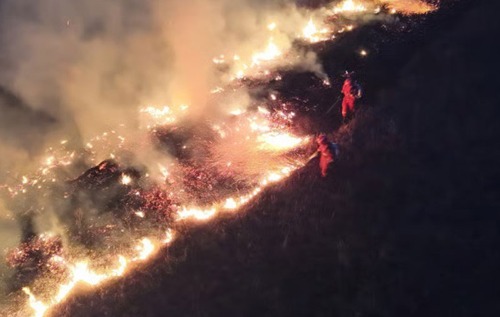
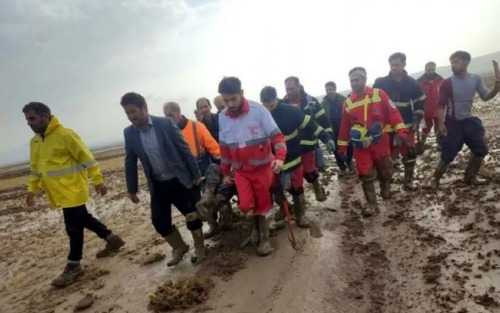
The 6th page of Rodong Sinmun dated 27 October 2026 carried an article exposing those responsible for turning the Arctic into an arena of confrontation; an article condemning Israel’s actions that are further aggravating the situation in the Middle East; Russian President’s rejection of European countries’ claims about a “Russian threat”; the Russian Defence Minister’s emphasis on the need to counter Western war moves; important instructions issued by President Xi Jinping concerning earthquake damage in Tibet; news of the worsening humanitarian crisis in Yemen; and reports of natural disasters in Belgium, Mongolia and Iran. Those Responsible for Turning the Arctic into an Arena of Confrontation Recently, an Arctic Circle Forum attended by NATO member states was held in Reykjavik, the capital of Iceland. A US representative attending the forum said that military expansion in the Arctic should be stepped up. He revealed that the US was investing billions of dollars in Alaska for this purpose and planned to build Arctic ports and airfields together with its allies. In fact, the US military has embarked on a plan to modernise Elmendorf Air Force Base in Alaska, pouring approximately US$7 billion into it to strengthen the air force’s operational capabilities in the Arctic and North Pacific regions. Dozens of fifth-generation fighter aircraft, E-3 airborne early warning and control aircraft, C-17 heavy transport aircraft and RC-135V/W strategic reconnaissance aircraft are reportedly to be deployed at the base. At the end of September, the US concluded a security agreement with Denmark and Greenland. Under the agreement, the US will modernise an air base it has operated for some time in northwestern Greenland and build additional military bases. It has also obtained the right to land and take off aircraft anywhere in Greenland. Claiming that it must prepare for vigorous Russian submarine activity, Canada is seeking to acquire from Germany 12 new submarines capable of operating beneath the ice for extended periods. There can be no doubt that these moves are a dangerous attempt to strengthen the military presence in the Arctic under the pretext of a “growing threat,” contain Russia and other countries it regards as adversaries, and pursue its own objectives. Meanwhile, NATO member states in Europe are also frantically pushing ahead with the militarisation of the region as they prepare for offensive operations in the Arctic. Northern Norway is the area undergoing the most active militarisation. A new naval base was established there in 2023, and British special forces and the Dutch Marine Corps reportedly stay at the base during military exercises. At the end of last year, NATO opened a new air operations command centre in a city in northern Norway. Norway is also seeking to deploy offensive weapons in its northern regions, targeting Russia’s Kola Peninsula. Germany, which dispatched a naval squadron to the Arctic last summer, plans to establish a joint technical-maintenance base at a major Norwegian naval base in 2029 for German and Norwegian submarines. While driving the militarisation of the Arctic, NATO is rehearsing various scenarios for offensive operations in extreme cold through military exercises of all kinds. As military tensions in the Arctic continue to mount, the European Union recently issued a “New Arctic Strategy,” saying that it “reflects the new geopolitical reality” and pointing to the importance of the Arctic region in the field of security. China’s Global Times commented that the European countries’ “New Arctic Strategy” could produce the opposite of its intended effect by pursuing security excessively and placing undue emphasis on a contest of strength. The reckless actions of the US and its allies, which heighten the danger of military conflict, are arousing Russia’s vigilance. Russia is an Arctic country in the fullest sense of the term. Much of the Arctic landmass, its population and extensive maritime areas belong to Russia. Russia has consistently advocated the peaceful use of the Arctic and the safeguarding of its security. NATO’s challenge poses a grave threat to Russia’s traditional interests in the Arctic. The Russian Foreign Minister said that NATO made no secret of its intention to turn the Arctic into a new front for containing the development of Russia and its supporters, and asserted that NATO’s intensifying military activity in the Arctic posed a direct threat to Russia’s security. He added that Russia would respond appropriately to the actions of its adversaries. Russia is closely monitoring the situation and taking the necessary measures to defend its interests in the Arctic. In response to NATO’s militarisation of the Arctic, Russia is strengthening its forces in the country’s northwestern regions. As part of this effort, it has re-established the Leningrad Military District and is enhancing the district’s combat capacity and potential. New military equipment and weapons capable of operating at low temperatures are undergoing tests. New icebreaking patrol ships are also being commissioned. The modernisation of the nuclear-powered submarine fleet, the core of Russia’s military strength in the Arctic, is being accelerated. NATO seeks to conceal its own bellicose nature—the fact that it is responsible for turning the Arctic into a dangerous arena of military confrontation—by portraying Russia’s military activities there as a “threat.” Yet the reality lays bare, in every detail, NATO’s aggressive nature: seized by a fever for confrontation, it undermines the dignity and interests of other countries and creates serious obstacles to world peace and security. Staff Reporter Jon Jong Ho Actions Further Aggravating the Situation in the Middle East At the end of September, Israeli Prime Minister Netanyahu claimed that there were signs that adversaries might attempt an attack ahead of the elections scheduled for late October, and threatened that Israel would strike anyone who challenged it, anywhere and at any time. His reckless remarks, couched in terms of a “threat to national security,” foreshadowed a further intensification of Israel’s military offensive. In fact, since then the Israeli army has stepped up its military attacks, trampling still more brazenly on the territorial sovereignty of neighbouring countries. Between the 11th and the 20th alone, Israeli forces repeatedly entered southern Syria, fired on farmers to prevent them from going to their fields, blocked roads and searched homes. Israel is also continuing to intensify military operations in southern Lebanon, openly revealing its intention to occupy the area permanently. Recently, Israel’s Minister of Defence threatened to seize more territory if Hezbollah attacked Israel. He added that the Israeli army would not withdraw from Lebanese territory unless Hezbollah laid down its arms. Senior Israeli politicians have already declared that disarming Hezbollah—by military or political means—remains a central objective of the offensive. Since launching a new military offensive against Hezbollah in the region last March, the Israeli army has occupied approximately 700 square kilometres of territory and driven out about 200,000 residents. Tens of thousands of people have been killed or wounded in its barbarous airstrikes. According to the United Nations Children’s Fund (UNICEF), as of the end of September, more than 260 children had been killed and 1,056 wounded. Four hundred and thirty-six schools had been destroyed, depriving approximately 100,000 children of places to learn. Most are suffering from hunger and have no access to medical care. More than 60 villages and over 23,000 homes have been destroyed. These are atrocities committed by the Israeli army on the pretext that the sites had been used as Hezbollah military positions. Through the barbarous war manoeuvres of Israeli warmongers, southern Lebanon has already become a second Gaza Strip. Israel has consistently expanded its territory by means of bloody aggression and massacres, annexing Palestinian and other Arab lands. Now, taking advantage of the current crisis in the Middle East, it invokes “self-defence” and the “elimination of threats” to invade other people’s lands at will and drive out their rightful inhabitants. Israel is pursuing sinister designs: it intends to annex the Gaza Strip and the West Bank of the Jordan River in their entirety, while gradually encroaching on the territories of Syria and Lebanon as well. Because of this source of evil, which disregards international law and recklessly pursues territorial expansion, plunging the Middle East into an endless whirlwind of destruction and bloodshed, the situation is moving with every passing moment towards an explosive turn. Staff Reporter Ho Yong Min Russian President Rejects European Countries’ Claims of a “Russian Threat” At a press conference on the 23rd, Russian President Vladimir Putin rejected European countries’ claims about a “Russian threat.” He said that the political developments in Europe clearly showed that the European peoples did not want to fight Russia, adding that Russia was preparing for no war with European countries and had no desire to fight them. He denounced as a kind of political schizophrenia the clamour that a “threat” was coming from Russia and that preparations must therefore begin for war with it. Russia has always advocated a peaceful settlement of the Ukraine conflict, he said. However, if Kyiv wanted a different resolution, Moscow would continue its special military operation and achieve all its objectives through it. He stressed that defeating Russia on the battlefield was impossible, and that inflicting a “strategic defeat” on it was even more unrealistic. 【Korean Central News Agency】 Emphasis on the Need to Be Ready to Counter Western War Moves Russian Defence Minister Andrei Belousov stressed the need to be prepared to counter Western war moves at a meeting of the joint board of the defence ministries of Russia and Belarus on the 22nd. He said that the military and political situation surrounding Russia and Belarus remained complicated. NATO, the European Union and Ukraine were deliberately escalating tensions, he noted, while hostile activity by the West against Russia and Belarus was intensifying. He exposed how European countries were shifting their industrial sectors to a wartime footing and building infrastructure for the rapid deployment of forces, while NATO was conducting military exercises to practise offensive scenarios directed against Russia and Belarus. He said that NATO’s preparations for war required the armed forces of Russia and Belarus to respond promptly to changes in the military and political situation. As part of their countermeasures, he stated, the two countries regularly held military exercises and gave priority to practising joint operations based on the experience of the special military operation. 【Korean Central News Agency】 President Xi Jinping Issues Important Instructions on Earthquake Damage in the Tibet Autonomous Region Chinese President Xi Jinping issued important instructions concerning earthquake damage in Nagqu City in the Tibet Autonomous Region. He called for every effort to be concentrated on search-and-rescue operations and for all-out efforts to be made to treat the injured, so as to minimise casualties as far as possible. He pointed out that, since the disaster area was at a high altitude and the weather was cold, close monitoring of the earthquake situation and weather changes was necessary, and rescue work had to be conducted scientifically to prevent secondary disasters. He stressed the need to resettle the people in the affected areas, urgently repair damaged infrastructure and firmly ensure the safety of the lives and property of the people. In accordance with the instructions, a working group was dispatched to the area, and relief operations are reportedly being conducted intensively in the affected region. 【Korean Central News Agency】 Humanitarian Crisis Worsens The armed conflict in Yemen is worsening the humanitarian crisis. According to information released by the UN Office for the Coordination of Humanitarian Affairs on the 23rd, the number of people forced to flee in the country has risen to more than 256,000 since early August. More than 2,000 displaced families have nowhere to shelter and are living out in the open. Many people are reportedly suffering from shortages of food, fuel, medicines and other essentials. 【Korean Central News Agency】 Natural Disasters - On the 23rd, storms accompanied by torrential rain struck various parts of Belgium, causing damage. Trees were toppled by the storms, injuring several people, while transport was paralysed, with flights and railway services suspended. Some coastal areas reportedly experienced gusts of up to 99 kilometres per hour. Alerts were issued in several areas, including the capital, Brussels. - Damage caused by forest and grassland fires is mounting in Mongolia. According to information released by the country’s National Emergency Management Agency on the 23rd, the number of forest and grassland fires recorded so far this year had risen to 188, affecting more than 1,907,900 hectares. Firefighting operations were reportedly still under way in three eastern provinces. - On the 22nd, floods caused by torrential rain struck West Azerbaijan Province in western Iran. Six villages were inundated, three people were killed and six injured, and 24 residential buildings were damaged. Rescue operations were reportedly under way to search for those missing. 【Korean Central News Agency】
— In Mongolia —
— In Iran — | |
| Category: English | Views: 69 | | | |