22:29 International News in DPRK Media (October 1, 2026) | |
Pyongyang, 1 October (RSTV) [조선어] [English] [Русский] [中国语]
The 5th and 6th pages of Rodong Sinmun dated 1 October 2026 carried a letter presented by the participants in the International Academic Symposium commemorating the 80th anniversary of the founding of Kim Il Sung University to the respected Comrade Kim Jong Un; a reception given by the Chinese Ambassador Extraordinary and Plenipotentiary on the occasion of the 77th anniversary of the founding of the People’s Republic of China; the return home of the Russian delegation that had participated in the Second DPRK–Russia Forum of University Rectors; news concerning China’s construction of a powerful socialist modern country; an article exposing Japan’s manoeuvres to revive militarism; statements by Mexico, the League of Arab States and Egypt opposing interference by outside forces in internal affairs and condemning Israel; the operation of a gold refinery in Burkina Faso; India’s efforts to prevent air pollution; Brazil’s campaign against organised crime; flood damage in Cambodia and Thailand; the growing number of refugees in Yemen; and general information on the prevention of strokes. To the Respected Comrade KIM JONG UN A Respectful Letter to His Excellency KIM JONG UN Respected Kim Jong Un, On the occasion of the 80th anniversary of the founding of the prestigious Kim Il Sung University of Korea, we visited Pyongyang, filled with feelings of friendship, and successfully held the International Academic Symposium. We regard it as the greatest honour to present this letter, imbued with our boundless reverence, to Your Excellency, the respected leader of the Korean people. We express our profound gratitude to Your Excellency, the respected Kim Jong Un, for arranging this meaningful gathering and paying meticulous attention to the successful proceedings of the symposium, thereby enabling scholars of universities from various countries of the world and scholars of Kim Il Sung University to deepen the bonds of friendship and further expand exchanges and cooperation in the development of science and technology and education. Held under the theme “The Development of Science and Education and Social Progress,” this International Academic Symposium constituted a meaningful occasion for further strengthening and developing the exchange and friendly cooperation between universities in various countries of the world and Kim Il Sung University, with a view to more powerfully promoting the progress of human society through the development of science and technology and education. During the symposium, we learned much about the warm love and trust of Your Excellency, the respected leader who cherishes and honours scientists and educators without limit, and about the policy of your government, which is building a promising country that makes a leap forward through the power of science and technology and firmly guarantees its future through education. We were also deeply impressed by the fervent patriotic devotion and high attainments of the scholars of Kim Il Sung University, who are devoting themselves to the struggle for the development of the country’s science and technology and education, upholding the plans and intentions of Your Excellency, the respected Kim Jong Un. Although our visit was not long, during our stay we toured Kim Il Sung University and various beautiful places in Pyongyang, including Hwasong Street. We were able to see and hear with our own eyes and ears the striking development of your country, which is advancing fearlessly, overcoming challenges and difficulties, and the happy laughter of its people. This wondrous reality has been brought about by the unique strength of Juche Korea and the might of single-minded unity; it cannot be conceived apart from the outstanding ideas and extraordinary leadership of Your Excellency, who regards devoted service for the good of the people as a sublime political ideal and political conviction. With the respected Kim Jong Un at its head, Kim Il Sung University will further enhance its dignity and reputation as the supreme centre of Juche-based science and education, and the heroic struggle of the Korean people to build a powerful socialist country in which the ideals and aspirations of the people are splendidly realised will certainly emerge victorious. The scholars from various countries who participated in the symposium came to share the firm common understanding that the constant expansion of multifaceted academic exchanges and contacts with Kim Il Sung University would be highly beneficial to the development of science and technology and the promotion of education for the progress of human society. Based on the excellent achievements and experience gained at this academic symposium, we shall make active efforts to further develop multifaceted exchanges and cooperation with various educational and scientific institutions of your country, including Kim Il Sung University. Taking this opportunity, we sincerely wish Your Excellency, the respected Kim Jong Un, good health for the vigorous development and prosperity of the Democratic People’s Republic of Korea and for the eternal happiness of its people. We extend our highest and most sublime respects. All the participants in the International Academic Symposium Pyongyang, 30 September 2026 Reception Given by the Chinese Ambassador Extraordinary and Plenipotentiary on the Occasion of the 77th Anniversary of the Founding of the People’s Republic of China
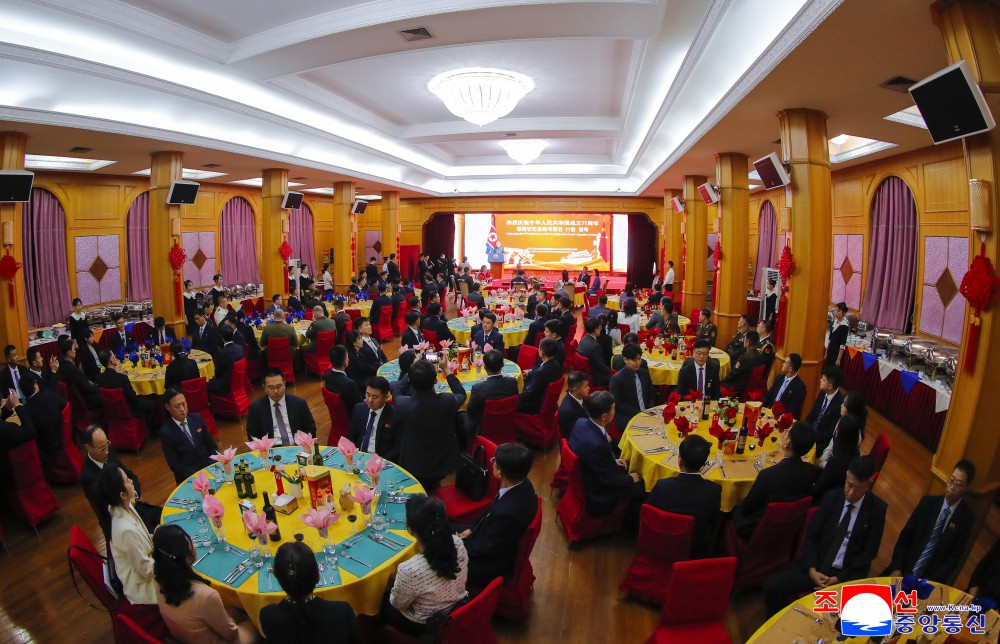
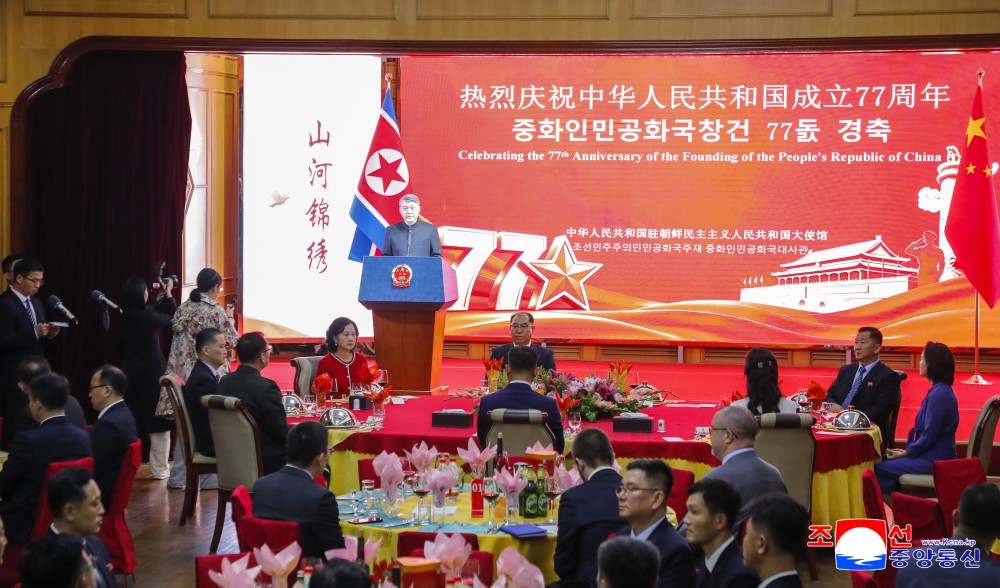
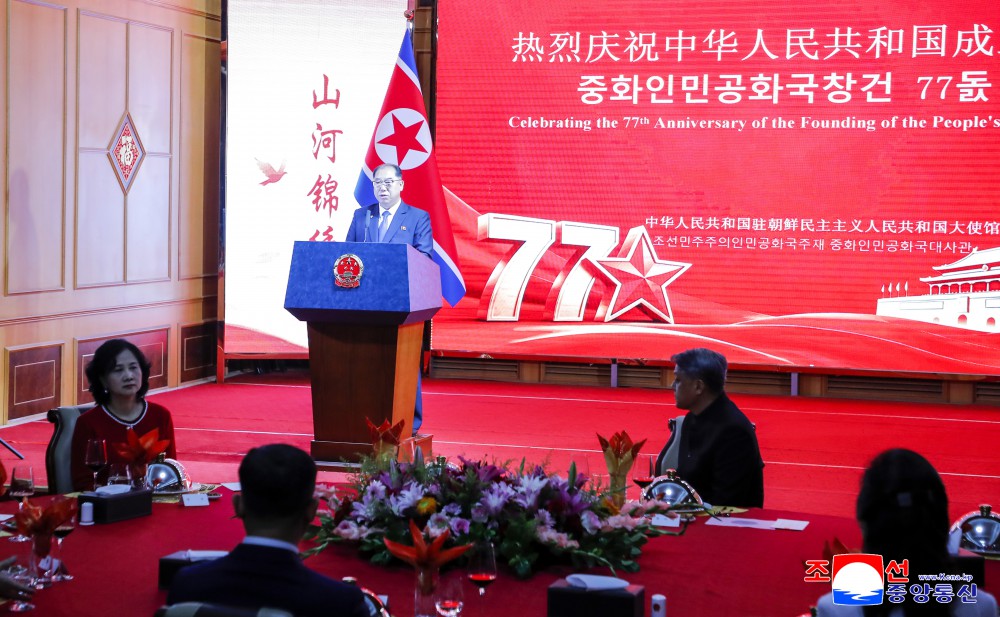
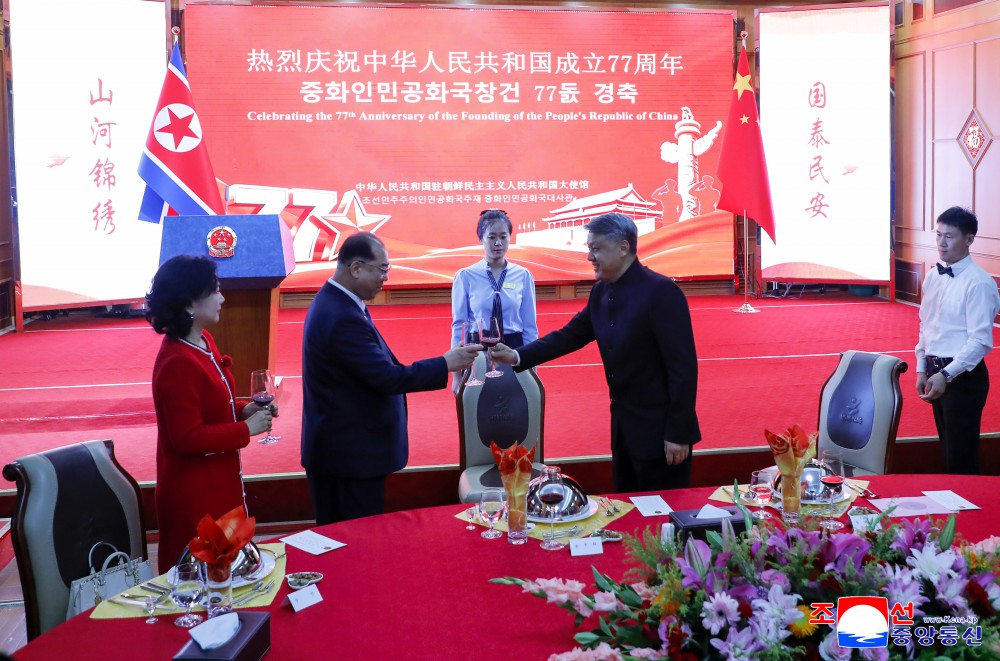
Wang Yajun, Ambassador Extraordinary and Plenipotentiary of the People’s Republic of China to Korea, hosted a reception at the embassy on 30 September on the occasion of the 77th anniversary of the founding of the People’s Republic of China. Kim Hyong Sik, Vice-Chairman of the Standing Committee of the Supreme People’s Assembly of the Democratic People’s Republic of Korea; Mun Song Hyok, Deputy Department Director of the Central Committee of the Workers’ Party of Korea; Kim Myong Su, Vice-Minister of Foreign Affairs; Ryu Un Hae, Vice-Minister of External Economic Affairs; officials of relevant sectors; and members of the diplomatic corps in Korea were invited to the reception. Members of the Chinese Embassy and Chinese guests staying in Korea also attended. Wang Yajun delivered a speech at the reception. He noted that the new China had achieved innovative development in various fields, including state administration, the economy and the people’s living standards, and said that all these achievements were the result of the firm leadership of the Communist Party of China and the Chinese people rising up in unity and struggling without yielding. He stressed that the supreme leaders of the two parties and the two countries had illuminated the direction for China–DPRK relations to develop in keeping with the times, breathing new vitality into the socialist cause of the two countries through two historic summit meetings in Pyongyang. He expressed the willingness to implement thoroughly the important common understanding reached by the supreme leaders of the two parties and the two countries and to guide the development of China–DPRK relations in a sound and stable manner, so that the two sides might join hands and achieve brilliant successes on the road of socialist construction. Kim Hyong Sik then delivered a speech. He said that the founding of the People’s Republic of China was an epoch-making event which opened a new phase in the destiny-shaping struggle of the Chinese people and laid a solid foundation for China’s dignified emergence on the world stage and the rejuvenation of the Chinese nation. He noted that this year, on the occasion of the 65th anniversary of the signing of the Treaty of Friendship, Cooperation and Mutual Assistance between the two countries, the two sides had grandly conducted high-level exchanges and commemorative events, once again demonstrating the invincible unity and bonds between their peoples. He stressed that, upholding the spirit of the important agreements reached by the top leaders of the two parties and the two countries, Korea would work jointly with the Chinese comrades to closely expand exchanges and cooperation in all fields and consolidate China–DPRK friendship in accordance with the interests of the peoples of both countries. The participants raised their glasses to the health of the respected Comrade Kim Jong Un and the respected Comrade Xi Jinping, and to the prosperity and flourishing of the People’s Republic of China and the constant strengthening and development of China–DPRK friendship and cooperation. On the same day, the Consul General of the People’s Republic of China in Chongjin also hosted a reception. 【Korean Central News Agency】
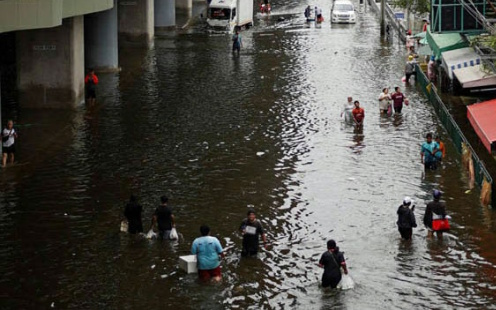
Russian Delegation Returns Home after Participating in the Second DPRK–Russia Forum of University Rectors The Russian delegation headed by Konstantin Mogilevsky, Vice-Minister of Science and Higher Education of the Russian Federation, which had participated in the Second DPRK–Russia Forum of University Rectors, returned home on 30 September. Officials of relevant sectors, the Ambassador Extraordinary and Plenipotentiary of the Russian Federation to Korea and embassy officials saw them off at Pyongyang International Airport. 【Korean Central News Agency】 China Advancing Vigorously along the Roadmap for Building a Powerful Country Today marks the 77th anniversary of the founding of the People’s Republic of China. The founding of the People’s Republic of China on 1 October 1949 was a brilliant victory achieved by the Chinese people in their protracted revolutionary struggle and a momentous event that opened a new era in the thousands-year history of the Chinese people. After the founding of the People’s Republic of China, the Chinese people constantly transformed the face of their country under the leadership of the Communist Party. Today China is achieving conspicuous successes in the struggle to build a powerful socialist modern country in every respect. The Chinese people are waging a vigorous struggle to implement the 15th Five-Year Plan, which is of decisive importance for the comprehensive construction of a powerful socialist modern country. The Communist Party of China has set as the goal of the new five-year plan the laying of a solid foundation for guiding economic and social development and basically realising socialist modernisation. It has defined the achievement of high-quality development in production and construction, a drastic enhancement of self-reliance in science and technology, and the continuous improvement of the people’s quality of life as the main directions of economic development. Accordingly, the Chinese government and people are directing all their efforts towards achieving excellent results in economic development and social stability. They are accelerating the development of science and technology. China is building up powerful scientific and technological forces, deepening international scientific and technological cooperation and increasing the overall efficiency of the national innovation system. Attaching importance to the training of talent, it is strengthening efforts to cultivate first-rate leading scientific and technological personnel and young scientific and technological talents. China is lifting underdeveloped regions and sectors in the construction of the digital economy and focusing on raising the level of economic development on the basis of cutting-edge science and technology, including artificial intelligence. Beijing and Shanghai municipalities, Guangdong Province and other regions have drawn up and are implementing plans to promote the development of artificial-intelligence technologies. Great emphasis is being placed on high-speed railway construction, one of the important items of infrastructure for economic and social development. By 2030, the total length of railway lines is expected to reach approximately 180,000 kilometres, of which some 60,000 kilometres will be high-speed railway sections. Plans and measures are being drawn up and implemented to bring about greater innovation in the energy sector, including electric power, which serves as a driving force for national economic development. In accordance with the detailed presentation of tasks and key assignments to be carried out in urban renewal by 2030, as well as plans and objectives for accelerating the modernisation of agriculture and rural areas, activities are under way to provide the people with a more civilised living environment. The government is continuously consolidating the foundations of food security, increasing the comprehensive productive capacity of agriculture and accelerating the construction of beautiful rural communities for farmers. ```htmlIn accordance with a long-term plan for basically establishing a modernised ecological-environment monitoring system by 2035, efforts are under way to operate and intelligently modernise the national ecological-environment monitoring network, achieve coordination, mutual interconnection and integration between central and local monitoring networks, and establish modernised monitoring systems in some regions ahead of others. Under the leadership of the Communist Party, the Chinese people continue to advance vigorously along the roadmap for building a powerful socialist modern country in every respect. Staff Reporter Jang Chol Japan’s Record of Ceaselessly Rushing towards the Revival of Militarism (6) A Drastic Increase in Military Expenditure Japan’s sinister design to rush towards becoming a war state while deceiving the international community can also be clearly seen in its manoeuvres to increase military expenditure. The ruling forces have increased military spending by every overt and covert means in an effort to turn the “Self-Defence Forces” into regular armed forces and realise the transformation of Japan into a military power. In order to appease the vigilance of the international community, Japan stipulated in 1976 that military expenditure should remain below one per cent of gross domestic product, but this itself was a cunning stratagem. The calculation was that, even if military expenditure were fixed at one per cent while gross domestic product continued to grow, the actual amount would likewise continue to increase. Japan’s military expenditure did not greatly exceed this one-per-cent scale, but by the beginning of the 2000s Japan had come to rank second only to the United States in the amount of its expenditure. Japan, however, was not satisfied with this. The one-per-cent ceiling was an inconvenient obstacle to the realisation of its ambition to rearm. For this reason, Japan increased its actual military expenditure through various crafty methods. One of these methods was the use of supplementary budgets. A supplementary budget is an additional budget intended for projects that have become particularly urgent after the regular budget has been drawn up. Japanese authorities set military expenditure in the regular budget at approximately one per cent of gross domestic product, and then achieved an actual increase by inserting military-related items into supplementary budgets. At the same time, they devised a method of submitting itemised requests when applying for budgetary allocations. When drawing up and submitting a military budget proposal, they presented only the items without specifying the amounts. As a result, the total budget appeared to be smaller than it really was. In addition, they employed methods such as including expenses that should originally have been counted as military expenditure under budget items belonging to other sectors. Not content with this, in recent years they have been manoeuvring to eliminate the very obstacles that limit increases in military expenditure. After clamouring that Japan had no intention of keeping military expenditure below one per cent of gross domestic product and that, since the present situation was “the greatest crisis since the war,” it was necessary to build a system for defending the lives and territory of the people, Japan presented, at the end of 2022, the goal of increasing its military budget to two per cent of gross domestic product by 2027. Since then, it has increased the budget systematically every year. Japan’s official military budget, presented under the signboard of “defence,” has shown a continuous upward trend for more than ten years. Having drastically increased its military expenditure and broken records year after year, Japan is squandering the enormous sums of money on the introduction of offensive weapons and equipment, including the purchase of the latest stealth fighter aircraft, the development of long-range missiles and the possession of aircraft carriers. Last year, too, it created the “Maritime Transport Group of the Self-Defence Forces,” specialising in transporting the personnel and military equipment of the “Self-Defence Forces.” Recently, after holding the launching ceremony for the first transport vessel to be assigned to the group, it announced plans to build and deploy additional vessels in succession. The ceaseless, unlimited expansion of military expenditure and the constant enlargement of pre-emptive-strike and long-range-strike capabilities based on it clearly reveal Japan’s true intentions: it has cast off the veils of a “peaceful state” and “exclusively defence-oriented policy” and is sharpening the sword of aggression. Instead of reflecting on and compensating for its past crimes, Japan continues to cling to manoeuvres to increase military expenditure in order to revive militarism and realise its ambition of renewed aggression. Such behaviour poses a grave threat to peace and security in the region. Japan’s identity as a force of war is becoming increasingly evident. Staff Reporter Ri Chan Il Rejecting Interference by Outside Forces in Internal Affairs The President of Mexico stressed his opposition to interference by outside forces in internal affairs during a rally held in a square in Mexico City on 27 September. Referring to the historic struggle for Mexico’s independence and social transformation, he said that the present government did not place its hopes in others in such fields as welfare programmes, the economy and security. He further declared that no external force or economic and political privileged class had the right to determine Mexico’s present and future, and that this right belonged solely to the Mexican people. 【Korean Central News Agency】 Condemnation of Israel’s Acts of Escalating Tension The League of Arab States issued a statement on 27 September condemning Israel’s continuing atrocities in the Palestinian territories. The statement condemned Israel’s manoeuvres to escalate tension in the occupied Palestinian territories, including East Jerusalem, and the restrictions on the movement of Palestinians imposed during Jewish religious holidays, denouncing the fact that such acts had become routine. The statement appealed to the international community, particularly the United Nations Security Council, to stop all measures and practices by Israel that violated the rights and freedoms of the Palestinians. Meanwhile, the Egyptian Foreign Ministry also condemned Israel’s military actions and the repeated incursions by Israeli settlers into the Al-Aqsa Mosque, and demanded an end to acts that escalated tension in the occupied Palestinian territories. The Foreign Ministry stressed that Egypt supported the establishment of an independent Palestinian state with East Jerusalem as its capital, based on the 1967 borders. 【Korean Central News Agency】 For Social Progress and Development Gold Refinery Begins Operations The first gold refinery in Burkina Faso was built in the capital city of Ouagadougou and began operations on 28 September. A ceremony marking the start of operations was held in the presence of the country’s President. The President stressed that the operation of the gold refinery demonstrated the government’s determination to firmly control the country’s strategic resources and achieve economic self-reliance and prosperity. Efforts to Prevent Air Pollution Efforts are being made to prevent air pollution in Delhi, India. On 28 September, the city government announced measures to address the situation, in view of the sharp deterioration in urban air pollution every year from November to February of the following year. Accordingly, practical measures aimed at reducing sources of air pollution, including restricting the operation of vehicles and suspending construction work, will be implemented. Strengthening the Struggle against Organised Crime Brazilian police carried out an operation in Rio de Janeiro on 28 September to destroy organisations involved in drug and arms trafficking. It was reported that, during the operation, three members of criminal organisations were eliminated and 20 firearms, ammunition, grenades and 83 kilograms of narcotics were seized. 【Korean Central News Agency】 Flood Damage Cambodia has suffered flood damage as a result of torrential rains. According to information released by the country’s government on 28 September, floods affected 44,889 households in ten provinces, of which 3,685 households were evacuated to higher ground. In addition, 43,084 houses were damaged and 49,925 hectares of paddy fields were rendered unusable. The damage was most serious in Battambang, Siem Reap and Banteay Meanchey provinces. Thailand’s disaster-prevention agency reported that eight people had died and 1.8 million people had been affected by floods that had swept across the country since 16 September. Bangkok was reportedly declared a flood-affected area on 26 September after incessant rain lasting 48 hours inundated wide areas and caused severe traffic congestion. 【Korean Central News Agency】 $IMAGE5$
Growing Number of Refugees amid Armed Conflict The United Nations Office for the Coordination of Humanitarian Affairs stated on 28 September that, as the armed conflict in Yemen intensified, the number of people forced to flee had risen to 142,000. In addition, more than 150 civilian casualties had occurred as a result of the conflict since the beginning of August. The continuing conflict is driving the already vulnerable health-care system of the country towards collapse, and communicable diseases, including cholera and measles, are reportedly spreading widely. 【Korean Central News Agency】 General Information Milk Consumption Can Help Prevent Strokes Milk can help prevent strokes. Researchers in one country found that drinking 180 grams of milk a day lowered the likelihood of strokes among people aged from 30 to 79. Overall, the risk of stroke fell by approximately seven per cent over a ten-year period, while among some people it declined by 10.6 per cent. The researchers stated that the beneficial properties of milk were attributable to the presence of key nutrients, including calcium, potassium and magnesium. These minerals help relieve tension in the blood vessels, improve blood circulation and regulate blood pressure. Earlier studies showed that the risk of stroke depended on the type of milk. In other words, low-fat milk was found to be beneficial to a certain extent, whereas milk with a high fat content did not demonstrate any marked preventive effect. In addition to the protein and calcium familiar to everyone, milk contains abundant vitamins and minerals that play key roles in maintaining health. Vitamin B12 maintains the functions of the nervous system and the production of red blood cells, thereby helping to prevent fatigue, while iodine, which is deficient in everyone, is necessary for thyroid function, metabolism and energy levels. In addition, the combination of calcium, potassium and magnesium in milk can help maintain normal vascular function and regulate blood pressure. 【Korean Central News Agency】 | |
| Category: English | Views: 16 | | | |